High Hospital Bills, Weak Oversight: Karnataka Protest Set to Tap Into Healthcare Law Debate
Statewide ‘Right to Health’ rally comes amid unresolved healthcare policy discussions, regulatory gaps and contrasting health laws across Indian states
 OOB News Desk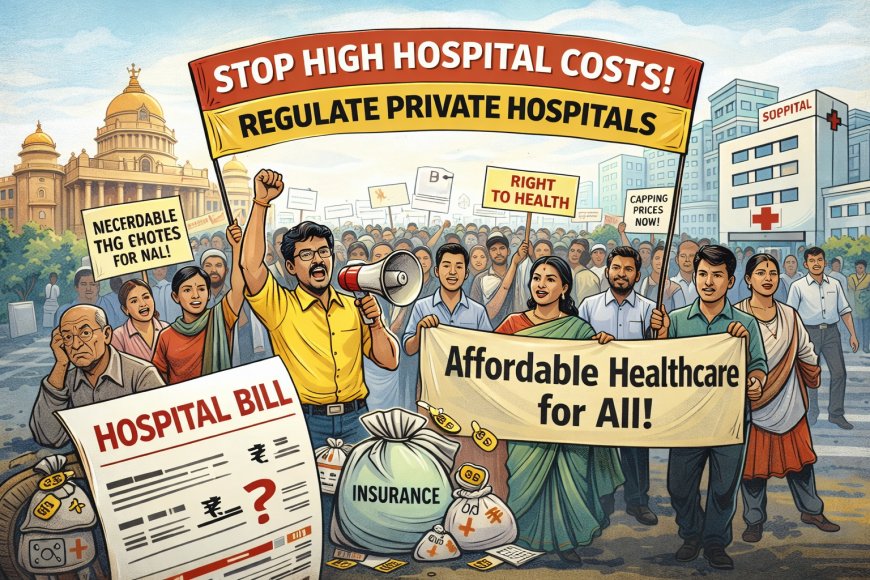
Bengaluru | Jan 21 :
As many as 35 organisations across Karnataka are set to launch a statewide ‘Jatha for Right to Health’ from February 2, protesting high charges in private hospitals and gaps in access to affordable care — an issue that has repeatedly surfaced in legislative debates but remains largely unresolved.
The rally, which will cover all districts before culminating in Bengaluru on February 27, comes against the backdrop of Karnataka’s existing regulatory framework under the Karnataka Private Medical Establishments (KPME) Act, 2007.
While the law mandates registration, minimum standards and grievance redressal mechanisms for private hospitals, it does not impose clear caps on consultation fees, diagnostics or treatment costs — a gap activists say has enabled unchecked commercialisation of healthcare.
Healthcare policy debates in recent years have reflected this tension. Legislators have raised concerns over steep hospital bills, lack of transparency in billing and patients being pushed into debt, while the government has acknowledged challenges in regulating prices across a mixed public-private healthcare ecosystem.
Amendments passed to the KPME Act have focused on compliance and oversight, but demands for stronger patient-centric safeguards and cost regulation remain contentious.
Healthcare groups also point to the proposed privatization of district hospitals, warning that such moves could further weaken public healthcare delivery already grappling with staff shortages, medicine scarcity and overcrowding. Patients, they argue, are often forced to move between hospitals or pay out of pocket for basic care.
The Karnataka debate mirrors developments in other states. Rajasthan, for instance, enacted India’s first Right to Health Care Act, legally guaranteeing access to free outpatient and inpatient services in public facilities and select private hospitals. While hailed as a landmark patient-rights law, it also triggered opposition from private healthcare providers over reimbursement and implementation.
Several states have adopted the Clinical Establishments (Registration and Regulation) Act, which seeks to standardise healthcare facilities and enforce accountability, but cost control remains uneven across the country. At the national level, proposals for a comprehensive Right to Health law are still under discussion, leaving healthcare regulation largely within the states’ domain.
Organisers of the Karnataka rally say the protest is not merely against high private hospital costs but a call for a legally enforceable right to healthcare — one that balances regulation, affordability and quality. By taking the issue from streets to policy discourse, they hope to push healthcare reform higher on the legislative agenda.