Govt Notifies TV Rating Policy 2026; Pushes Transparency, Accountability in Audience Measurement
Landing page viewership excluded; dual audits, DPDP compliance and expanded sample size mandated; entry norms eased for rating agencies
 OOB News Desk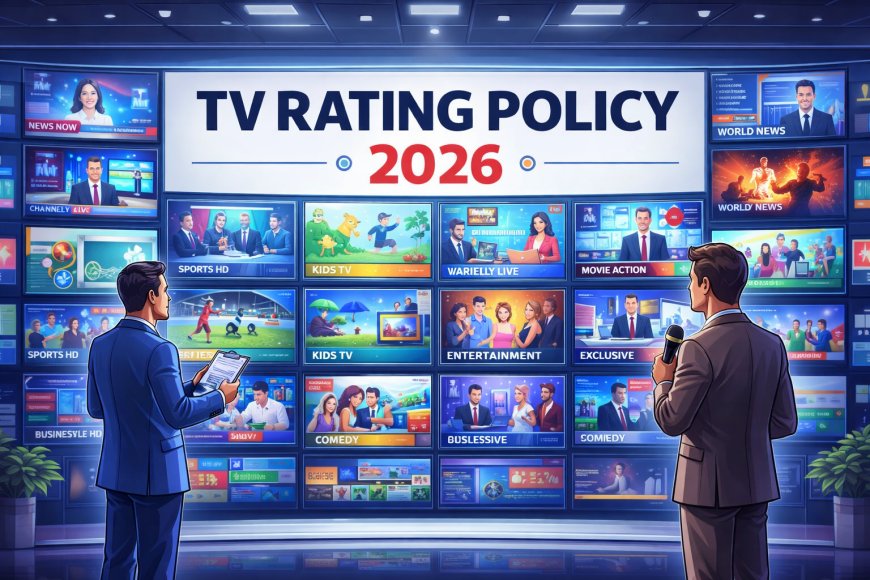
New Delhi | March 27 :
The Ministry of Information & Broadcasting (MIB) on Friday released the TV Ratings Policy 2026, laying down comprehensive guidelines to regulate television audience measurement in India, with a focus on ensuring transparency, independence, accountability and credibility in ratings.
The policy defines clear standards for the registration, operation, audit and oversight of agencies providing TV rating services, replacing the earlier guidelines issued on January 16, 2014.
A key reform under the new policy is the easing of entry norms. The net worth requirement for companies seeking registration as TV rating agencies has been reduced from ₹20 crore to ₹5 crore, aimed at encouraging greater participation and competition in the sector.
To ensure neutrality and eliminate conflicts of interest, the policy mandates that at least 50% of the Board of Directors of rating agencies must be Independent Directors with no links to broadcasters, advertisers or advertising agencies. It also bars agencies from undertaking consultancy assignments that could compromise independence.
In a major move to enhance data accuracy and representation, rating agencies are required to scale up their sample size to 80,000 metered homes within 18 months, with a shorter six-month deadline for existing agencies. The sample size must eventually be expanded to 1,20,000 homes. The policy also mandates technology-neutral measurement, capturing viewership data across Cable, DTH, OTT and Connected TVs, covering all screens within metered households.
On transparency and privacy, agencies must publish detailed methodologies and anonymised data on their websites. All operations must comply with the Digital Personal Data Protection (DPDP) Act, 2023, ensuring safeguards for viewer data.
The policy introduces a robust accountability framework through a mandatory dual-audit system, requiring quarterly internal audits and annual independent external audits. Additionally, the Ministry will set up an Audit & Oversight Team to conduct periodic field inspections.
For grievance redressal, agencies must appoint a Nodal Officer to resolve complaints within 10 days and establish an Appellate Authority for escalated cases.
A significant provision excludes landing page viewership from being counted in ratings. Such placements can only be used as a marketing tool. Broadcasters are required to disclose the presence of their channels on landing pages to rating agencies.
The policy also introduces graded penalties for non-compliance, ranging from temporary suspension of ratings to cancellation of registration in case of repeated violations.
Further, TV distribution platforms and OTT platforms are permitted to publish periodic viewership data of broadcasters or channels available on their platforms on their websites, without requiring registration under these guidelines.
With these measures, the Government of India aims to create a fair, competitive and well-regulated broadcasting ecosystem that safeguards stakeholder interests and strengthens public trust in television audience measurement