
Karnataka Tightens Grip on 'Hidden Killer' in Food, Steps Up Drive for a Trans Fat-Free Future
Karnataka Steps Up the Fight Against Trans Fat, Trains Over 52,000 Food Handlers Since 2024
 OOB News Desk
Bengaluru I July 21 :
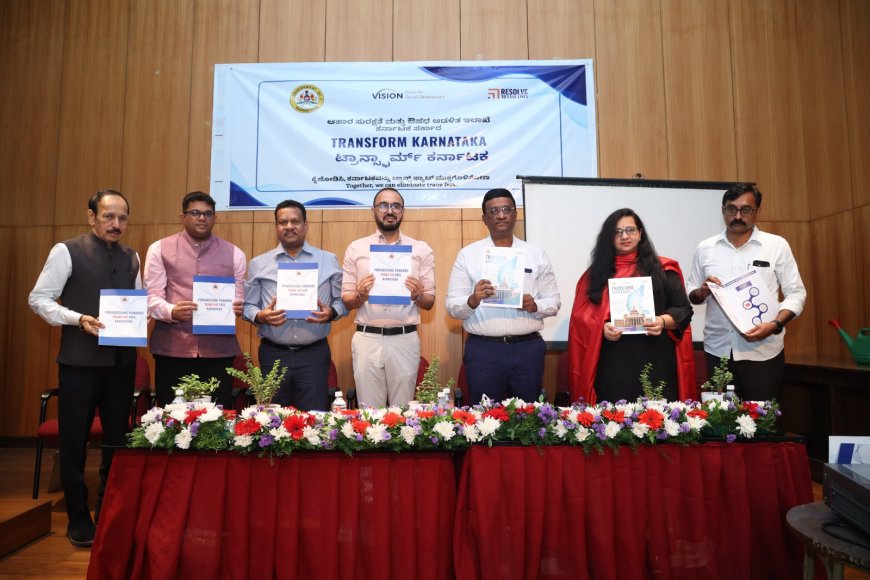
The Food Safety Department, Government of Karnataka, has ramped up its campaign against industrially produced trans fats, convening a State-Level Sensitisation Programme that brought together Designated Officers, Food Safety Officers, oil manufacturers and public health experts to review the state's progress and tighten compliance.
Industrially produced trans fats — found in partially hydrogenated vegetable oils used in frying, baking and processed snacks — remain one of the most damaging elements in the modern diet.
Officials at the programme reiterated that these fats sharply raise the risk of cardiovascular disease, coronary heart disease, obesity, metabolic disorders and adverse reproductive outcomes.
Globally, they are linked to over 278,000 deaths a year, including nearly 500,000 premature deaths from coronary heart disease, prompting the World Health Organization to call for their worldwide elimination.
That global campaign has made real headway but remains unfinished.
WHO's own tracking shows that by the end of 2023, just 53 countries — covering 46% of the world's population — had best-practice trans-fat policies in force, up sharply from only 6% coverage in 2018.
The health body estimates such policies could save close to 183,000 lives a year, yet more than 4 billion people worldwide are still unprotected, with the heaviest remaining burden in Africa and the Western Pacific.
In 2025, WHO's validation programme formally certified Austria, Norway, Oman and Singapore for eliminating industrial trans fats from their national food supplies, taking the global tally of validated countries to nine — a benchmark India has not yet reached, even as its regulatory limit already meets WHO's recommended threshold.
India has adopted this best-practice standard domestically, capping industrial trans fats at less than 2% in fats and oils — a limit WHO considers rigorous by global standards, having come into force nationally in 2022. Officials at Tuesday's programme said Karnataka intends to go further than the mandated floor, strengthening enforcement through risk-based inspections, expanded laboratory monitoring and consistent surveillance across the food supply chain.
The state highlighted tangible progress on the ground. More than 52,000 food business professionals have been trained since 2024, while over 45.87 lakh litres of used cooking oil have been collected between 2024 and 2026 under the Repurpose Used Cooking Oil (RUCO) initiative — a scheme that diverts spent frying oil away from re-use in food and toward conversion into biodiesel.
Enforcement action has also intensified, with the department imposing penalties worth ₹28.91 lakh alongside sustained awareness campaigns in print and digital media.
The initiative has drawn technical backing from global public health groups: Vision for Social Development (VSD) and Resolve to Save Lives (RTSL) are supporting Karnataka's capacity-building and evidence-based enforcement efforts, mirroring similar partnerships the two organisations have run in countries such as Nigeria, which built out its trans-fat testing infrastructure after banning the substance in 2023.
Leading surgeon, Dr. Prof Vishal U S Rao, and The Commissioner of the Food Safety and Drug Administration, Bengaluru, who were present, expressed that all the stakeholders — governments, industry, experts, laboratories and the public — were committed to work together to secure a trans-fat-free Karnataka. They described it as part of India's broader push to eliminate industrially produced trans fats from its food supply.
How to Practically Implement Trans-Fat Limits
Consumers: Read food labels and purchase products with trans-fat content within the permissible limit of 2%.
Food businesses (bakeries, restaurants) Procure raw materials (fats/oils) only after verifying the Certificate of Analysis (CoA) to confirm trans-fat compliance.
Manufacturers: Adopt appropriate technologies and processes to ensure manufactured fats contain less than 2% trans-fat.
Hoteliers/food service operators
1) Limit oil reuse to a maximum of 3 reheating cycles
2) Maintain frying temperature between 150°C and 190°C
3) Submit used cooking oil to RUCO (Repurpose Used Cooking Oil) collection agencies
4) Use smaller vessels with less oil and fry in smaller batches to make compliance easier to achieve